

Cazadores de Dragones
About This Exhibition
Paleontology exhibition about dinosaur discovery, fossil hunting, and the scientific work of uncovering prehistoric life.
Description
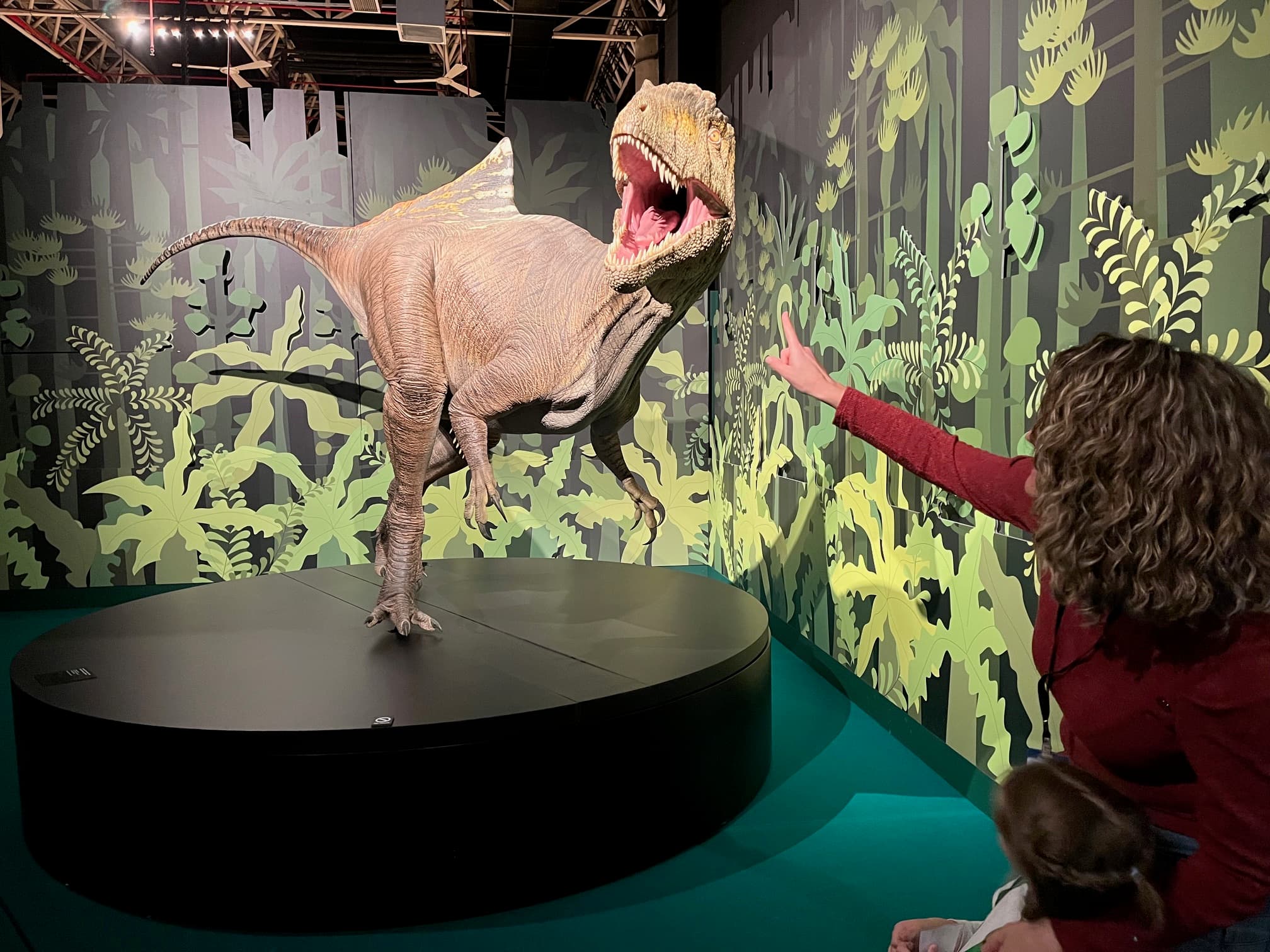
"Dragon Hunters" is a journey through the history of dinosaur research, exploring important milestones, their historical context and the people who made them happen. From the interpretations given to the earliest dinosaur bone discoveries to today's virtual palaeontology, the exhibition shows how scientific findings and research in each historical period have changed the analysis of dinosaurs. Victorian England, expeditions in the American West, the Gobi Desert, Tanzania and Patagonia are some of the significant historical events featured in the exhibition that help us understand why dinosaurs have become part of popular culture. This journey is accompanied by characteristic fossils from Spanish sites, including a replica of the holotype of the theropod Concavenator corcovatus, dinosaur eggs from Guadalajara, and dinosaur remains from Castellon, Cuenca, Teruel, Valencia and Soria. EXHIBITION AREAS 1. Mythological dinosaurology 2. Dinosaurs in palaeontology: - When palaeontology discovered dinosaurs - Archaeopteryx: A toothed bird from the Jurassic - The bone wars in the Wild West - Adventure dinosaurology - The dinosaur hunter paradigm: Tyrannosaurus rex - Dinosaurs behind the Iron Curtain - "Dinosaur Renaissance" - Poyos nesting site - The hunchbacked hunter of Cuenca - Dinosaurology in the 21st century 3. Recreation of a scientific excavation: Educational workshop THE HUNCHBACKED HUNTER OF CUENCA The star of the exhibition is Concavenator corcovatus ("the hunchbacked hunter of Cuenca"), a theropod dinosaur about 6 metres long that lived around 130 million years ago during the Lower Cretaceous in what is now the province of Cuenca. The exhibition features a replica of the fossil and a life recreation. It is the largest fossil discovered at the Las Hoyas site, and the most complete and best preserved medium-to-large theropod found in Europe. The specimen is almost complete and articulated, and its state of preservation is so exceptional that it even preserves impressions of scales and soft tissues. The exhibition closes with a section dedicated to new technologies applied to the study of animals from the remote past, which have caused a genuine revolution in our knowledge of dinosaurs in recent years. Collaborating institutions: Museum of Palaeontology of Castilla la Mancha, Conjunto Paleontologico de Teruel Foundation (Dinopolis), Museu Temps de Dinosaures, Museu de la Valltorta, Cosmocaixa Science Museum, Numantine Museum (Provincial Museum of Soria), Alpuente Palaeontological Museum, National Museum of Natural Sciences (CSIC), Autonomous University of Madrid, Royal Academy of Exact, Physical and Natural Sciences of Spain